
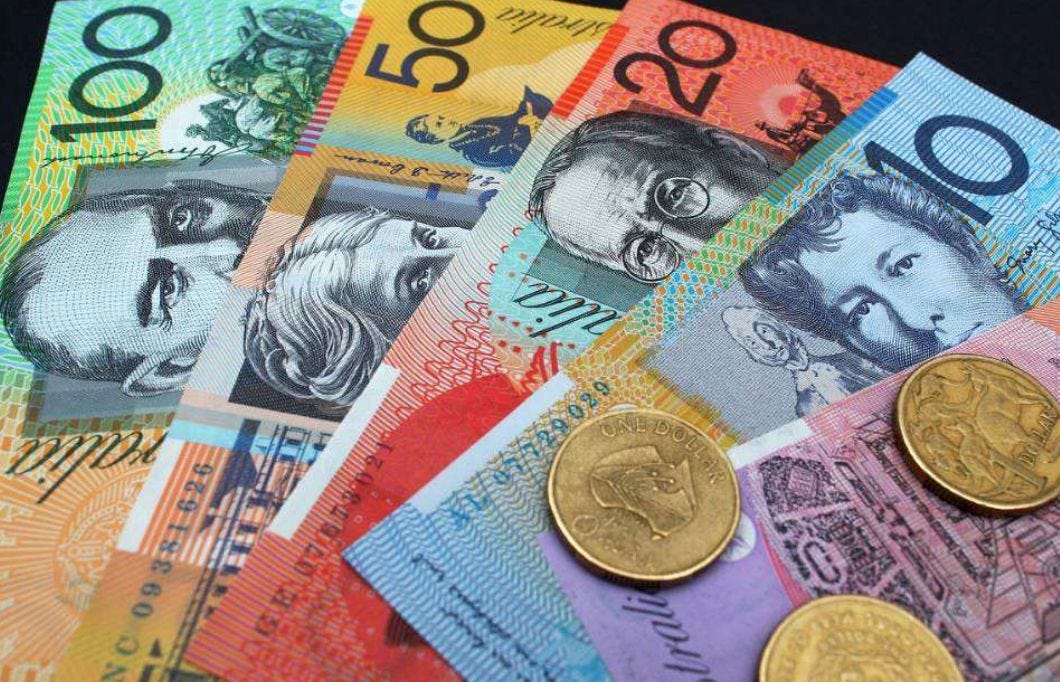
I was paying for coffee the other day and handed over a twenty-dollar note. The barista took it without question, rang it up, gave me change. Normal Tuesday morning stuff.
But on the drive home, I kept thinking: what did I actually give him? Paper and ink worth maybe five cents to produce. But somehow that paper was worth a coffee, and he accepted it like it was real.
Why did he take it? What makes that paper valuable?
What We’re Told
Most of us learn that money is what the government says it is. Dollars, euros, yen—they’re money because the government declares them legal tender. There’s that phrase right on the note: “This Australian note is legal tender.” We trust it, it works, life goes on. Makes perfect sense.
I never questioned it. Why would I? Worked for buying groceries, paying rent, living life. Everyone accepts dollars, shops take them, employers pay us in them. The system functions, so it must be fine.
And honestly, I still use dollars every day. I’m not suggesting we go back to bartering chickens or carrying around gold coins. But I started noticing some things that didn’t quite add up.
Like why bread costs more every year, but dollars don’t seem to change. Or why my grandparents could buy a house on one salary, but most of us can’t on two.

The Three Characteristics
Turns out, historically, real money has three characteristics:
Store of value – It holds its worth over time. If you earn it today, it should buy roughly the same amount of stuff in ten years.
Medium of exchange – You can trade it for goods and services. Pretty straightforward.
Unit of account – It measures value consistently. You can price things in it and compare.
Now here’s where it gets interesting: What we call “money” today—dollars, euros, whatever—only really does one of these well. The medium of exchange part. You can definitely trade dollars for stuff.
But store of value? Not so much. Your dollars lose purchasing power every year.
That’s not a bug—it’s inflation, and it’s built into the system. The Reserve Bank of Australia actually targets 2-3% inflation annually. They’re openly saying: “We’re making your money worth less on purpose.”
So what we use isn’t really money in the traditional sense. It’s currency. And there’s a difference.
Money vs Currency
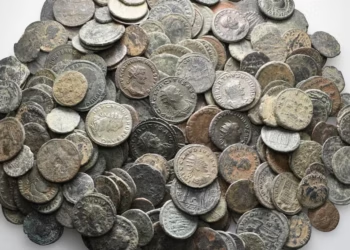
Money is something that stores value over time. Gold, silver, even cattle in ancient societies—these held value because they were scarce and couldn’t be created at will.
Currency is just a medium of exchange. It’s convenient for transactions, but doesn’t necessarily hold value long-term.
Fiat currency is what we use today. “Fiat” means “by decree”—it’s money because the government says so, not because it’s backed by anything physical.
And here’s the critical bit: Since 1971, our currency hasn’t been backed by anything at all.
Currency as Current
Here’s something I started noticing about the word itself: currency. It comes from “current”—as in flowing, like water or electricity.
That’s not an accident. Currency works best when it moves. When it flows through an economy—wages to purchases, purchases to businesses, businesses back to wages. When money pools up or stagnates, systems break down. The flow matters.
And maybe that’s the most honest way to think about what money actually represents: energy.
When you work, you expend energy—time, skill, physical or mental effort. Money becomes a claim on that stored energy you can trade later. You put energy in, you get a claim on other people’s energy out.
That made sense when money was gold or silver. Those metals required real energy to extract—mining, refining, transporting. You couldn’t create them from nothing. There were natural constraints. The energy equation balanced.
But modern fiat currency broke that link.
Now money gets created by typing numbers into a computer. No energy expenditure required. A bank creates a loan, and new money appears instantly. It’s not pulled from anyone’s savings. It’s not backed by anything physical. Just… created.
So when new money gets created at near-zero cost, someone is claiming other people’s energy without putting any in. That’s not exchange. That’s extraction.
The original concept was sound: currency as a way to store and transfer human energy efficiently. But when one group can create the medium of exchange at will, the energy equation breaks. They’re not trading stored energy—they’re diluting everyone else’s.
Keep that in mind as we look at what happened next.
What Changed in 1971
Before 1971, dollars were basically receipts for gold. Not directly—most of us couldn’t redeem them anymore by then—but internationally, they were. Thirty-five US dollars equalled one ounce of gold. Fixed rate. The currency was tied to something real.
Then on August 15, 1971, US President Richard Nixon “temporarily” closed the gold window. Suspended the convertibility of dollars to gold. Said it was necessary to fight inflation and protect American jobs.
Fifty-plus years later, that “temporary” suspension is still in place.
What this meant: The US dollar became pure fiat. Backed by nothing except the government’s word and the military’s ability to enforce that word. And since most global currencies are tied to the dollar… the entire world monetary system became fiat.
This was the biggest monetary change in human history. The first time ever that the global reserve currency had zero physical backing.
And most people have no idea it happened. I certainly wasn’t taught about it in school.
What’s Happened Since
Since 1971, some interesting patterns emerged.
The money supply exploded. In Australia, the M3 money supply has grown exponentially. What used to be measured in billions is now measured in trillions.
But wages haven’t kept pace. Median income has grown, sure, but nowhere near the rate of money supply growth or asset prices.
Speaking of assets—houses, stocks, property—they’ve skyrocketed in dollar terms. But did houses actually get that much better? Or did dollars just get worse?
1971: Average Australian house cost about $20,000. Median income was around $5,000. That’s a 4:1 ratio.
2024: Average house costs $800,000+. Median income is about $90,000. That’s nearly a 9:1 ratio.
It’s not that houses got twice as hard to afford relative to economic productivity. It’s that the measuring stick—the dollar—got worse at measuring.
The Pattern I Noticed
Things aren’t getting more expensive. Dollars are becoming less valuable.
But we measure everything in dollars, so we blame the things instead of the measuring stick. We say “housing is in crisis” or “cost of living is out of control.” And sure, those are real problems. But they’re symptoms of a deeper issue: the currency itself is designed to lose value.
Your savings bleed purchasing power just sitting there. Not quickly enough to panic about day-to-day, but over years and decades? Significant wealth transfer from savers to… well, that’s a question worth asking.
The system rewards debt and punishes saving. Borrow money, and inflation helps you by making your debt worth less over time. Save money, and inflation punishes you by making your savings worth less.
Does that seem backwards? The prudent thing—saving for the future—is penalized. The risky thing—taking on debt—is rewarded.
Make Of It What You Will
So what is money, really?
I don’t have a perfect answer. But I know this: What we’re using isn’t money in the traditional sense. We’re using government-issued IOUs backed by trust, military force, and network effects.
And that’s fine for daily transactions, maybe. It works. I use it. You use it. The economy runs on it.
But calling it “money”—in the store-of-value, wealth-preserving sense—might be hiding something important.
Next time you look at a dollar, just notice: There’s nothing backing it except the promise that other people will accept it tomorrow. Maybe that’s enough. Maybe it’s not.
I’m not telling you what to think about this. Just sharing what I noticed. Once you see the difference between money and currency, though, it’s hard to unsee it.
Next: Who controls this currency? And how is it actually created?